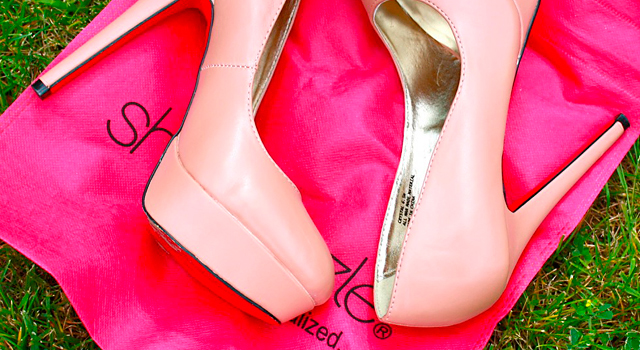
 ShoeDazzle Ditches Monthly Subscriptions For Boutique-Style Pampering
The online shoe company cofounded by Kim Kardashian announces
it's scrapping the monthly subscription model and adding lingerie and
dress lines. The moves reveal its true secret sauce.
ShoeDazzle
started out as one of the new generation of consumer startups centered
around a monthly subscription model: Sign up for the service and you get
a new pair of pumps (or wedges, or boots, or stilettos, or…) every
month for a mere $39.95. And they were celebrity-endorsed, no less.
But
today, after just three years in operation, ShoeDazzle is announcing it
is jettisoning the subscriptions. Does that mean they were a bust? Or
is there something more profound at work?
The latter, say
ShoeDazzle executives and investors. The subscription angle certainly
garnered the company signup-fueling coverage when it first opened its
doors back in March 2009 (as did the fact that cofounder Kim Kardashian
was helping curate the company's selection of proprietary footgear).
But ShoeDazzle's real insight, CEO Bill Strauss tells
Fast Company,
and the thing executives say will send it zooming ahead of its
competitors, is something that has gotten a little less play: the site's
personalization and pampering strategy that is perhaps the real key to
the company's astronomic growth. Over the last year, the site's number
of "members" has tripled from 3 million to 10 million.
(The
company doesn't release revenue figures, but Strauss says the growth in
those numbers is "following in a similar growth pattern" to the surge in
users.)
Every month, the ShoeDazzle system culls its new
inventory and drops a curated selection into each user's personal
"Showroom." The curations are based, initially, on a survey the user
fills out to establish their taste profile. Over time, the
recommendation algorithm gets more sophisticated as it takes into
account the user's actual purchases. The result is a collection of items
users feel have been handpicked just for them.
Strauss calls this
experience akin to one you'd receive at a high-end boutique, where
salespeople know your name and your tastes. "If you walk into a
boutique, and they say, 'These new shoes just came in, and they fit your
style and personality,' you feel good about that, and you're more
likely to buy," Strauss says.
Therein lies ShoeDazzle's real innovation. If
Zappos
got us all used to shopping online as easily as we would our local
department store (with a wide selection of items and a free-returns
policy that lets shoppers try items on risk-free), then ShoeDazzle
believes consumers are ready for the more intimate shopping experience
they get at real-world boutiques.
In fact, the idea for ShoeDazzle came out of an exchange between cofounder Brian Lee (a tax attorney who previously cofounded
LegalZoom
with O.J. Simpson attorney Robert Shapiro) and his wife. "She came home
one day from the expensive showrooms in Beverly Hills, and he asked
her, 'Why do you buy these expensive shoes? Why don't you go to Payless
or DSW?'" Strauss says. "She replied, 'Brian, you don't understand. When
women shop, they want to feel beautiful and pampered.'"
ShoeDazzle's
stab at simulating the boutique experience doesn't end with the
website. Its customer service agents are rigorously trained to answer
customers' fashion and styling questions, as well as more prosaic
inquiries about shipping and returns.
"Customers will call in and say, 'Look at these dresses. Which one do you think goes with those shoes?" Strauss says.
Questions
like these have led to another decision ShoeDazzle is announcing today:
It's expanding its inventory to lingerie and dresses. "Our customers
want us to dress them from head to toe," Strauss says.
As with
just about every successful consumer startup these days, ShoeDazzle has
spawned a passel of imitators and competitors. Executives and investors
say they're not worried. "It's relatively easy to get an e-commerce
company to $15 or $20 million in revenue,"
Andreessen Horowitz partner John Farrell tells
Fast Company. "But it's the ability to execute at a large scale that gets you to hundreds of millions of dollars."
Last
year, Andreessen led a $40 million Series C round of investment in the
company. It also helped lead the search for a replacement for Lee, who
had declared his intention to step down from the CEO slot in order to
start yet a third venture (The Honest Company, cofounded with actress
Jessica Alba, which sells chemical-free baby products).
Strauss,
the cofounder and former CEO of ProFlowers, was tapped for the top slot
at ShoeDazzle because of his experience retaining high levels of
customer satisfaction at a booming consumer Internet company. "He's very
heads-down and focused on operational execution and delighting the
customer at a large scale," Farrell says.
The decision to jettison
the subscription model was one of Strauss's first major strategy
decisions. The subscriptions were a clever way to get the company off
the ground, but it turns out they don't match customers' real-world
purchasing preferences. "Some people liked the model," Strauss says,
"but a lot of customers told us they'd like to buy two or three times in
one month and then maybe not for a few more months."
Opening up the purchasing model will allow the company to "capture as much of that demand as possible," Strauss says.
The
practice of using celebrity stylists--of which Kardashian is just one
(actress Denise Richards recently signed on to "create" a pair of high
heels)--will persist. In an era where Hollywood stylists have become
celebrities in their own right and the number of magazines and websites
showcasing the latest trends has exploded, consumers are hungrier than
ever before for a trusted, gilded source to guide them through the
fashion wilderness.
But the key to busting out of the pack remains
execution, Farrell and Strauss say--the ability to retain the "high
touch" experience even as the company grows to tens of millions of
customers. "Celebrities and subscription models are great ways to get a
business going," Farrell says. "But what will differentiate ShoeDazzle
in the next phase is building the company out to a gigantic scale."


